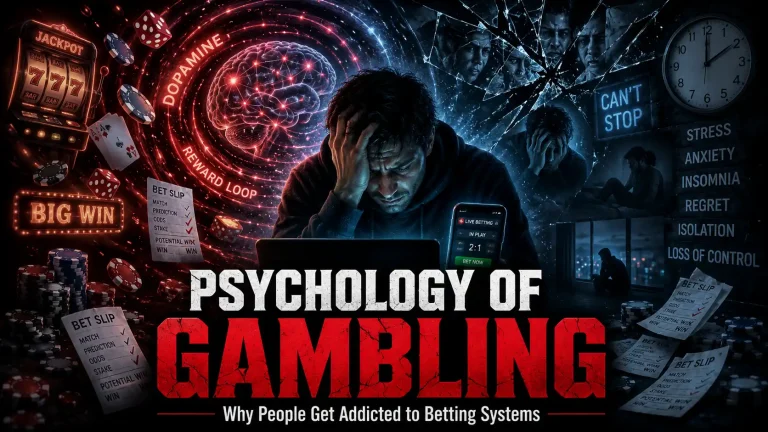
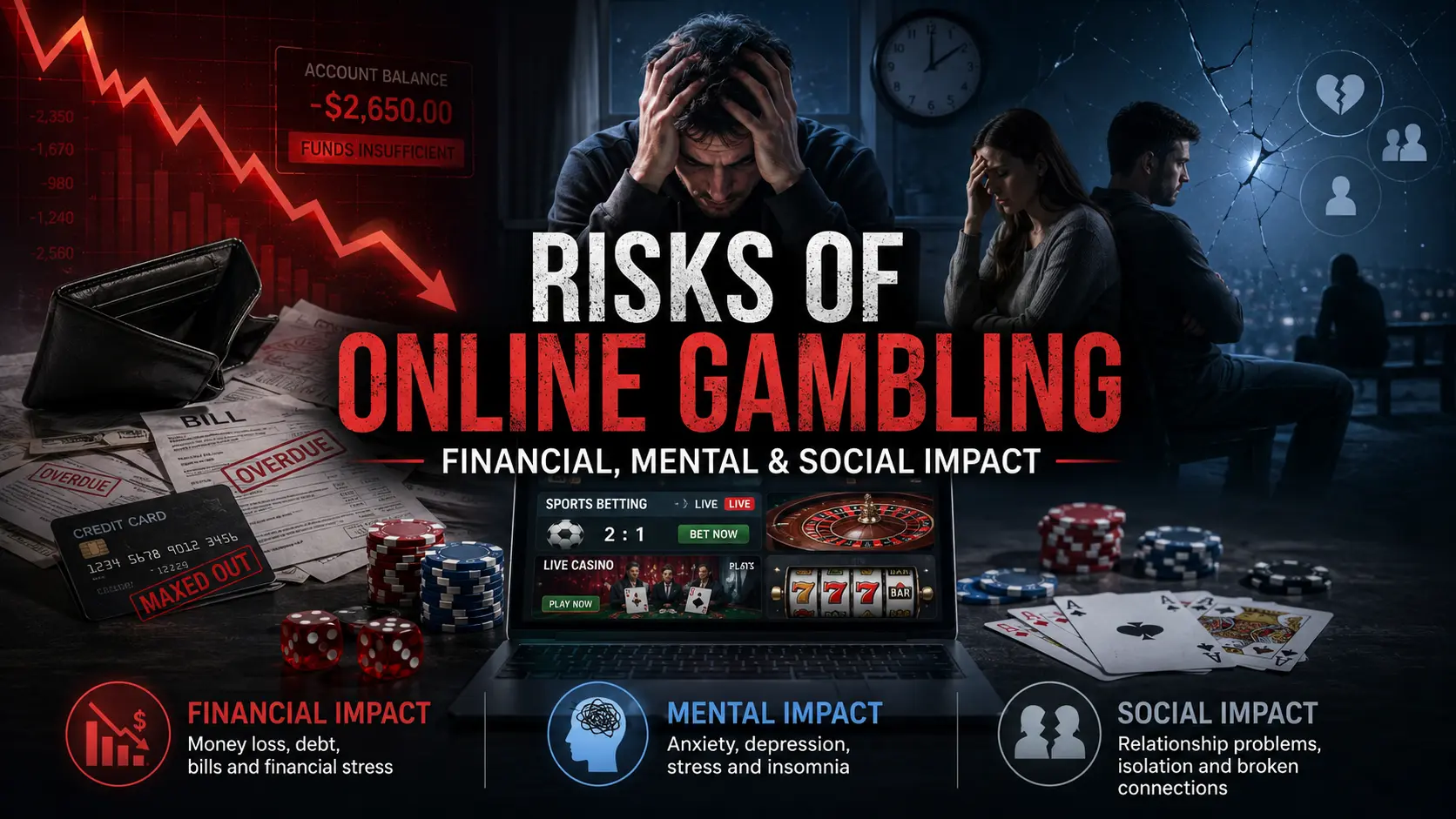
Risks of Online Gambling Financial, Mental & Social Impact

Introduction
Online gambling has become very common because websites and mobile apps make betting easy and fast. People can place bets from home using only a phone, internet connection, and digital payment method.
At first, online gambling may look exciting, but it carries serious risks. These risks can affect money, mental health, family life, studies, work, and social relationships.
What Is Online Gambling?
Online gambling means placing money on games, sports, numbers, casino games, lottery-style draws, or betting systems through websites or mobile apps.
Common Types of Online Gambling
Common examples include online betting, casino games, sports betting, number games, card games, and digital lottery-style platforms.
Why Online Gambling Is Risky
Online gambling is risky because it is always accessible. A person can gamble anytime, which makes it easier to lose control.
Financial Risks of Online Gambling
Money loss is the biggest risk of online gambling. Many people start with small amounts but later spend more than they planned.
Losing More Than Expected
Online gambling platforms are designed around uncertainty. There is no guarantee of winning. A person may lose again and again while hoping for one big win.
Chasing Losses
Chasing losses means gambling again to recover lost money. This is one of the most dangerous habits because it often creates bigger losses.
Debt and Borrowing
Some people borrow money from friends, family, or loan apps to continue gambling. This can lead to debt, stress, and long-term financial problems.
Fake Platforms and Scams
Many online gambling websites are not properly regulated. Some may delay payments, block accounts, or disappear after taking money.
Mental Health Impact of Online Gambling
Online gambling can strongly affect the mind. The excitement of betting can turn into stress, anxiety, and addiction.
Stress and Anxiety
Losing money can create pressure and fear. A person may keep thinking about losses, future bets, or how to recover money.
Gambling Addiction
Online gambling can become addictive because it gives fast results and quick emotional highs. The brain starts seeking the excitement again and again.
Mood Changes
A person may feel happy after winning and angry or depressed after losing. These mood swings can affect daily life.
Sleep Problems
Many people gamble late at night. This can disturb sleep, reduce focus, and affect health.
Social Impact of Online Gambling
Online gambling does not only affect one person. It can also damage family relationships, friendships, and social life.
Family Conflict
Money loss and secret gambling can create arguments at home. Family members may feel hurt, angry, or worried.
Loss of Trust
If someone hides gambling habits or lies about money, trust can break. Rebuilding trust becomes difficult.
Isolation
People addicted to gambling may avoid friends, family, and normal activities. They may spend more time alone on betting apps or websites.
Poor Work or Study Performance
Gambling can reduce focus. Students may ignore studies, and workers may lose productivity because their mind stays busy with betting.
Legal and Safety Risks
Online gambling can also create legal problems, especially in countries where betting laws are strict.
Illegal Betting Platforms
Some platforms operate without licenses. Using such platforms can be risky because users may have no legal protection.
Privacy and Data Risk
Unsafe websites may misuse personal information, payment details, or identity documents.
Payment Problems
Users may face blocked withdrawals, fake payment systems, or hidden charges.
Why People Continue Online Gambling
Many people continue gambling because they believe the next bet will change everything. This hope keeps them trapped.
False Hope of Quick Money
Online gambling often creates the idea that money can be earned quickly. In reality, gambling is based on risk, not stable income.
Near-Miss Effect
A near-miss happens when someone almost wins. This makes them feel they were close to success, even though they still lost.
Easy Mobile Access
Because gambling apps are always available, stopping becomes harder. One notification or result update can pull a person back.
Warning Signs of Online Gambling Addiction
A person may have a gambling problem if they gamble more than planned, hide betting from family, borrow money to gamble, feel restless when stopping, or keep betting after losses.
Ignoring Daily Responsibilities
When gambling becomes more important than study, work, family, or health, it is a serious warning sign.
Betting to Escape Problems
Using gambling to escape sadness, boredom, stress, or loneliness can make the habit stronger.
How to Reduce Online Gambling Harm
The safest choice is to avoid risky and illegal gambling platforms. People should not treat gambling as a way to earn money.
Set Strong Boundaries
Avoid saving payment details on gambling websites. Do not gamble with borrowed money, rent money, school fees, or family savings.
Talk to Someone Trusted
If gambling feels hard to stop, speak with a trusted family member, friend, teacher, counselor, or mental health professional.
Block Gambling Access
Removing betting apps, blocking websites, and avoiding gambling groups can help reduce temptation.
Conclusion
Online gambling can create serious financial, mental, and social problems. It may start as entertainment, but it can quickly become harmful due to easy access, fast results, and the hope of quick money.
The biggest risks include money loss, debt, addiction, stress, family conflict, loss of trust, and legal trouble. Understanding these risks is important because gambling is not a safe or reliable way to earn money.