Most Popular Satta Matka Markets and Their Historical Background

Introduction
Satta Matka has a long and controversial history in South Asia. It is mostly known as a number-based gambling system that became popular in India during the 20th century. Over time, different Satta Matka markets became famous because of their timing, results, operators, and local popularity.
This article explains the historical background of popular Satta Matka markets for informational purposes only. It does not promote gambling or participation in illegal betting activities.
What Is a Satta Matka Market?
A Satta Matka market is a specific betting format or result schedule within the Matka system. Each market usually has its own name, opening time, closing time, result pattern, and number format.
In simple words, a market is like a separate category where people historically placed number-based bets.
Historical Background of Satta Matka
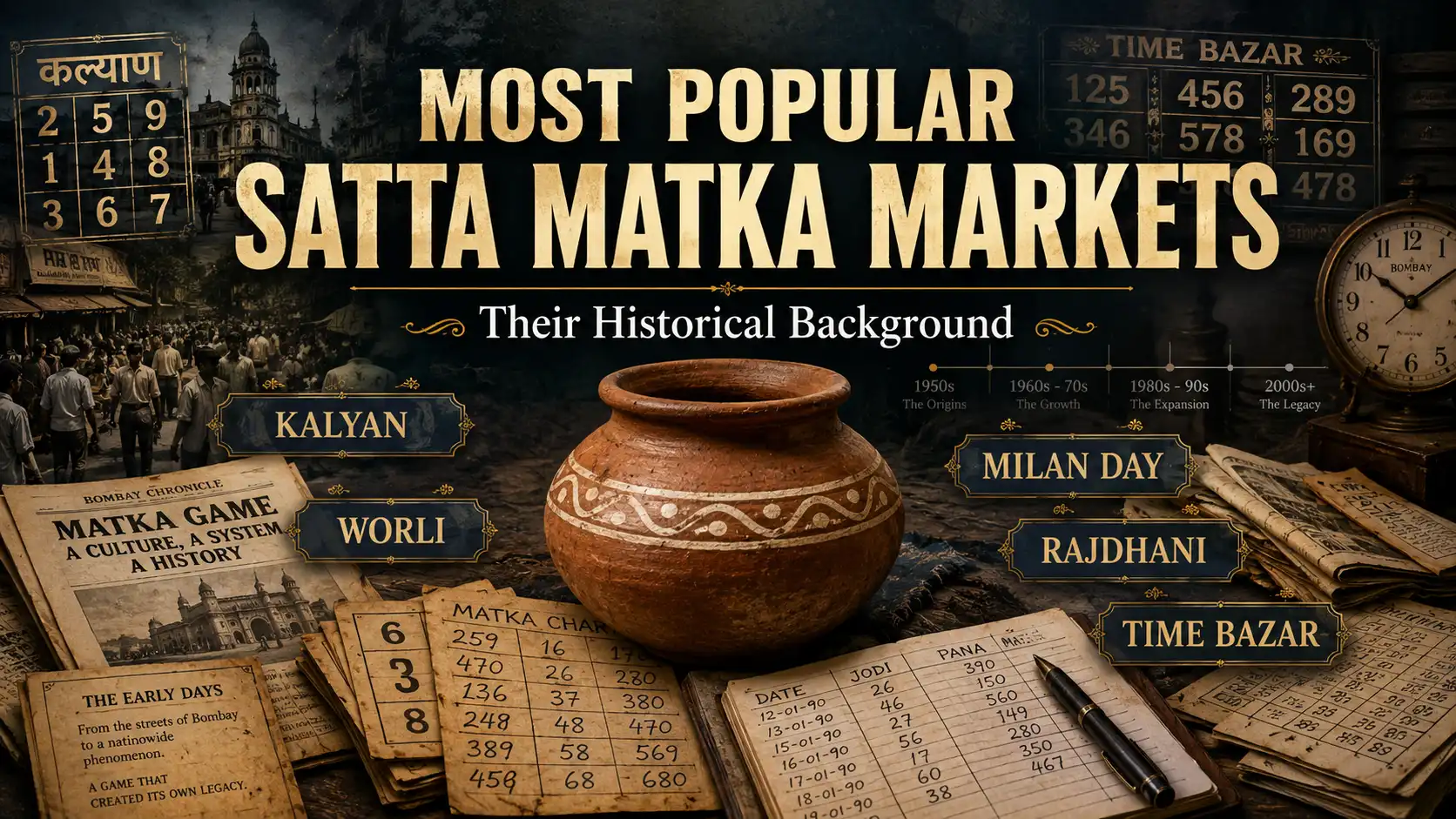
Satta Matka became popular in India during the 1950s and 1960s. Earlier, betting was linked with cotton rates from the New York Cotton Exchange. Later, when that system changed, local number draws became common.
The word “Matka” came from the old method where number slips were placed inside an earthen pot and drawn randomly. This created a structured number-based betting system.
Rise of Matka Markets in Mumbai
Mumbai played a major role in the growth of Satta Matka. During the 1960s and 1970s, Matka became widely known in working-class areas, mills, markets, and local communities.
Many famous Matka markets developed in Mumbai because the city had a large population, active business culture, and strong underground betting networks.
Kalyan Matka
Kalyan Matka is one of the most well-known names in Satta Matka history. It became popular because of its fixed timing and wide reach across different cities.
Historically, Kalyan Matka was linked with evening-based result systems. Over time, the name became strongly connected with traditional Matka culture.
Main Mumbai Matka
Main Mumbai Matka is another famous historical market. It became popular because Mumbai was considered the center of Matka activity.
This market was known for late results and strong local following. Its name is still widely mentioned in discussions about old Matka systems.
Milan Matka
Milan Matka became known as another major market in the traditional Matka system. It had different versions and timings, which made it popular among people who followed number-based results.
The word “Milan” became associated with organized Matka markets and scheduled result patterns.
Rajdhani Matka
Rajdhani Matka is also a known name in Matka history. It became popular because of its market-style structure and regular result format.
The name “Rajdhani” means capital, which gave the market a strong identity. It was often discussed among followers of traditional Matka markets.
Time Bazar Matka
Time Bazar Matka became popular because of its daytime result schedule. Unlike some markets that were known for evening or night results, Time Bazar was connected with earlier timing.
This made it one of the recognizable names in the wider Matka market history.
Madhur Matka
Madhur Matka is another market name linked with number-based betting history. It became known because of its schedule and repeated use in Matka discussions.
Like other markets, Madhur Matka was part of the wider informal gambling culture.
Role of Operators in Market Popularity
Operators played a major role in making these markets famous. Each market often became popular because people trusted certain operators, result timings, or local networks.
However, these systems were usually unregulated, which created risks of fraud, manipulation, and legal trouble.
Why These Markets Became Popular
These markets became popular because they were simple to understand, had fixed result times, and created suspense. People followed them like a routine.
The combination of hope, risk, and quick results made these markets spread quickly in different areas.
Shift from Offline to Online Markets
Earlier, Satta Matka markets worked through local operators, slips, phone calls, and physical networks. With the growth of the internet, many names moved online.
Today, these market names are often used by websites and online platforms. However, online availability does not mean legality or safety.
Legal Status of Satta Matka Markets
Most Satta Matka markets are not legally approved. In India and Pakistan, unlicensed gambling and betting systems usually carry legal risk.
Even if a market name is historically popular, it does not mean it is legal. Users should understand the law before getting involved in any gambling-related activity.
Risks Connected With Satta Matka Markets
Satta Matka markets carry many risks, including money loss, addiction, fraud, fake results, and legal problems.
Since these markets are usually not regulated, users may have no protection if they lose money or face scams.
Cultural Impact of Matka Markets
Satta Matka markets became part of urban culture, especially in old Mumbai stories, films, and local discussions. Names like Kalyan, Main Mumbai, and Milan became known even among people who never participated.
This shows how deeply Matka history entered public conversation.
Conclusion
Popular Satta Matka markets such as Kalyan, Main Mumbai, Milan, Rajdhani, Time Bazar, and Madhur have a long historical background. They became known because of timing, local popularity, operators, and number-based result systems.
However, these markets are linked with gambling and legal risk. Understanding their history is useful for awareness, but participation in illegal betting systems can lead to financial, emotional, and legal problems.